

Centene Community Ice Center
Maryland Heights, MO
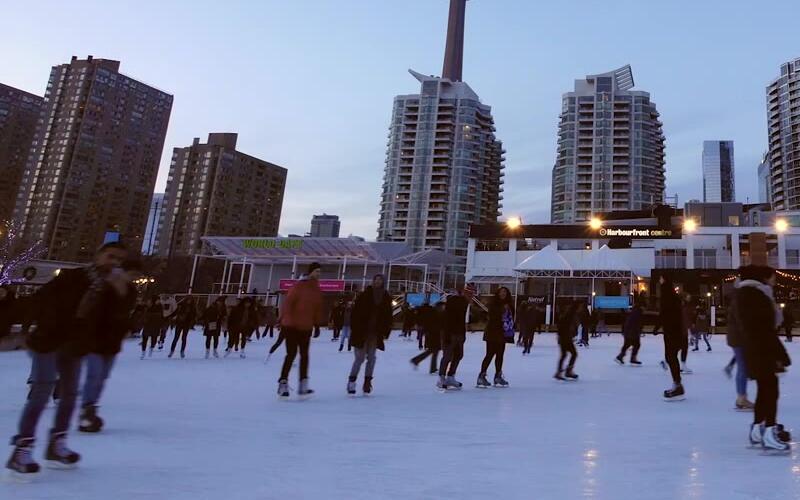
Pond ice can be skated on only when it is thick, solid and checked, and even then it is never guaranteed safe. Many state natural resources agencies cite at least 4 inches of new, clear ice as a minimum for activities on foot like walking or skating.
Guidance varies by agency, and conditions can change from one spot to the next on the same pond.
If you are unsure, stay off. Here is how to think about natural ice, what to look for, and what to do if something goes wrong.
Ice on ponds, lakes and rivers does not freeze evenly. Springs, currents, plants, snow cover and changing temperatures all create weak spots that can be impossible to see from the surface.
That means a single thickness measurement only tells you about the spot where you measured. A few steps away, the ice can be much thinner. This is why safety agencies avoid ever calling natural ice "safe" and instead offer minimum guidelines.
Keep these truths in mind:
Many state natural resources agencies publish ice thickness guidelines each winter. The details vary, but the most widely repeated figure for activities on foot is at least 4 inches of new, clear, solid ice.
Agencies typically recommend staying off ice thinner than that entirely. They also tend to call for much thicker ice for heavier activities, and the numbers they publish for vehicles are far higher.
A few important notes about these guidelines:
Not all ice is equal. The color and texture of ice tell you a lot about its strength.
| Ice type | What it looks like | What it means |
|---|---|---|
| New clear ice | Clear, dark or blue-black, often with a glassy look | The strongest type of natural ice. Thickness guidelines are usually based on it. |
| White or snow ice | Opaque and milky, formed when snow or slush freezes | Contains air pockets and is generally weaker than clear ice. Treat with extra caution. |
| Gray or dark slushy ice | Dull gray, wet or soft-looking | A sign of water within or on the ice. Stay off. |
| Honeycombed or candled ice | Rough, porous texture, often late in the season | Ice that is breaking down. Stay off. |
Many agencies suggest that ice with a layer of white ice should be treated as weaker overall, and some advise doubling their usual thickness guidance for white ice. When in doubt, do not go out.
Certain spots are known for thin or unpredictable ice, even when the rest of the pond looks fine.
Rivers, streams and any water with a current freeze unevenly and can stay thin all winter. Moving water also wears ice away from below. Skating on rivers and streams is especially risky.
Where water flows into or out of a pond, the movement keeps ice thinner. Underground springs can create weak spots in the middle of otherwise solid ice.
Pressure ridges form when ice sheets push against each other, buckling into raised lines or jumbled slabs. The ice around them can be cracked, thin or have open water. Stay well away from them.
Snow insulates ice and slows freezing. It can also hide cracks, slush and open water. Heavy snow can even push ice down and let water seep up.
Never judge ice by looking at it. You need to measure, and you need to measure in many places.
If any measurement falls short of local guidance, or you see slush, water or cracks, get off the ice the way you came.
If the ice meets local guidelines and you decide to skate, follow these rules every time:
Dress for the conditions, with warm layers and gloves. Our guide on what to wear ice skating has layering tips.
Falling into icy water is a true emergency. Acting calmly and quickly matters, and so does not creating a second victim.
Safety educators often sum this up as reach, throw, don't go.
If you want the fun of skating without the guesswork, a supervised, maintained rink is by far the safest option. Indoor rinks control the ice precisely, and many outdoor rinks are built and checked by staff.
Maintained rinks also give you smooth, resurfaced ice, which is easier and more fun to skate on than bumpy pond ice. Curious how they do it? Read how indoor ice rinks work. New to skating? Start with how to ice skate for beginners.
Ready to head out? Browse ice rinks by state or search the directory.
Many state natural resources agencies cite at least 4 inches of new, clear ice as a minimum for activities on foot, such as walking or skating. Guidance varies by agency, and no thickness guarantees that ice is safe everywhere on a pond.
No. White or snow ice contains air and is generally weaker than clear ice of the same thickness. Many agencies recommend being far more cautious, or staying off, when ice is white, gray or slushy.
Not necessarily. Ice near shore can be weakened by runoff, plants, docks and warmer shallow water. Check thickness in several places rather than assuming any area is safe.
Call 911 right away and do not go out onto the ice after them. Talk to the person, then reach toward them with a long object or throw them something that floats or a rope, from a safe position on shore.
A supervised, maintained rink is the safest choice. Outdoor rinks that are built and checked by staff, as well as indoor rinks, take the guesswork out of ice conditions.
Featured
Picked from the highest-rated rinks we list nationwide.
Maryland Heights, MO
East Lansing, MI
Henderson, NV


