Cedar Rapids Roughriders Hockey Club
Cedar Rapids, IA
What age to start, how group and private lessons differ, what Snowplow Sam and Basic 1 through 6 cover, and how to choose a hockey or figure path.
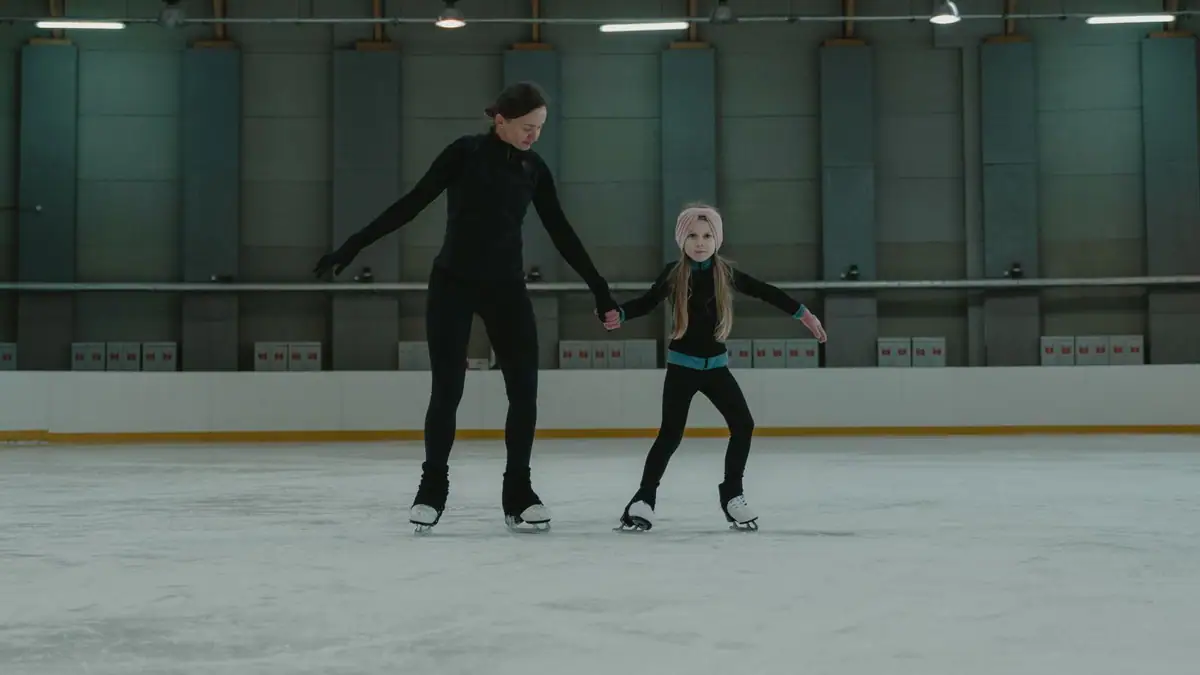
A useful kids' class has a level name you can look up, room to repeat that level, and a fee that says whether skates are included. Most U.S. rinks teach the first badges through Learn to Skate USA. The rink sets the age cutoff, the schedule, and the price.
Every dollar figure below was copied from the linked page on November 11, 2026. Still planning a first public session? Ice skating with kids covers helmets, skate aids, and how long to stay.
Snowplow Sam is four levels for children aged six and younger. Basic Skills is six levels for skaters over age 6. U.S. Figure Skating endorses the program with USA Hockey and US Speedskating, describes pathways for preschoolers, kids, adults, and skaters with disabilities, and says lessons run at over 1,000 programs.
Learn to Skate USA membership is separate from a U.S. Figure Skating membership. A club is for later, when a skater wants official tests.
The youngest age a rink will take is local:
A child who walks steadily and can follow a simple direction is ready to try. A child who will not can wait a season. The family guide has the longer readiness list.
The usual first enrollment is a group series: one level, other beginners, and the same weekly hour. Learn to Skate USA's parent handbook says skaters move up when they master a skill, that repeating a class is ordinary, and that a private coach can wait until one skill needs extra work.
It tells parents to look past a championship resume when they hire for a beginner, and it mentions a booster lesson of about 15 minutes.
Burnsville prints its ratios: 10 students per instructor for Snowplow Sam, Basic 1, and hockey skating, and 6 per instructor for Basic 2 through 6. Ask any other rink for its cap, and where parents stand.
The handbook says to watch from the bleachers, arrive about 20 minutes early, and have skates tied 15 minutes before class.
Private lessons on official pages come in two shapes. Mt. Shasta sells one 30-minute private lesson, and its group schedule was still to be determined on the 2026-27 fee page. Burnsville sells a 9-week private block for ages 3 and up, with 20 minutes of instruction and 40 minutes of practice.
Semi-private there splits the fee when two or more skaters share a level. Amounts are in the table below. A coach off the city list may have no posted rate. Ask the skating director whether the coach is a steady role model, has a plan for the skill, and is easy to reach between lessons.
Membership is $20 from July 1 through June 30.
The registration page includes the curriculum, a record book, the app, secondary sports accident insurance, professional instruction, and access to rinks and events. The parent page says some rinks fold that $20 into tuition and some have you pay Learn to Skate USA directly.
Burnsville includes a year of membership in a 9-week series and leaves it out of Skater Tots.
| Track | Who it is for | What the official pages say you learn |
|---|---|---|
| Snowplow Sam 1-4 | Children six and younger | The handbook says day one is marching, falling, and getting up, then a slow stop. Finishing the track leads into Basic Skills. |
| Basic 1-6 | Skaters over 6, and younger skaters who finished Snowplow Sam | Forward and backward skating, stops, edges, crossovers, and turns. This is the shared base for figure skating, hockey, and speed skating. |
| Hockey 1-4 plus power skating | Skaters learning hockey skating | Stance, stride, knee bend, edges, and agility. The hockey page says USA Hockey endorses it. Stick skills come later. |
The handbook's sample passing standard is a one-foot glide held for three times the skater's height. Mastery means eight successes out of ten. Reports come mid-session, repeats are expected, and makeup rules are local. After Basic 6 the pages continue into free skate.
Official U.S. Figure Skating tests need a club. Figure skates versus hockey skates is the boot choice that shows up then.
The Learn to Skate USA hockey track is four badges plus power skating: stance, stride, and knee bend, then speed and agility. The handbook says the next step is Intro to Hockey or Learn to Play, which adds stickhandling, shooting, and passing.
Burnsville's Hockey Tracks class, ages 5 and up after Snowplow Sam 2, keeps sticks and pucks off the ice.
USA Hockey's Active Start paper (ages 0 to 6) says to start in learn-to-skate, preferably without a stick. Its first-year Learn to Play sketch is 50-minute sessions, once or twice a week, for 16 weeks, with 9 to 13 skaters, no goalies, and no formal competition.
Coaches need Level 1 USA Hockey Coaching Education Program certification. The 6-and-under structure is for ages 4 to 6 after that base: stations of at most 6 to 8 children, about six minutes each, with the coach at eye level.
Rocky River Level 1, for 2026-27, is ages 4 to 6 who finished Snowplow Sam and can skate the width of the ice alone. The city lends equipment. Levels 2 and 3 require the player's own skates and stick, and the city says USA Hockey requires neck guards under 18.
Fees are in the table below. Try Hockey for Free lists October 3, 2026 and February 27, 2027, for a first hour with skates, a helmet, and gloves (a bike helmet and winter gloves are allowed), promoted to ages 4 to 9. Come Play Youth Hockey collects those options.
Chicago's free hockey-skills group is for skaters who already use hockey skates. Beginners use the beginner lesson that same morning.
These pages sell beginner classes as 5, 6, or 9 weeks, usually a short lesson plus practice the same day.
Day one in the handbook is falling, standing up, and marching. Practice between weeks is part of the plan. Baltimore's three public passes cover some of it. Elsewhere you buy a public session. Public skating sessions and how to ice skate for beginners cover that ice. Line up weeks, teaching minutes, and skates before you compare the prices below.
Five questions sort a good class from a vague one. Which Learn to Skate USA level is this, and where are new skaters placed? Burnsville does that by phone. What is the ratio, next to Burnsville's 10-to-1 beginners or USA Hockey's 6-to-8 children per station?
Which credential does the instructor hold? The handbook requires Learn to Skate USA training, testing, and a background screening. USA Hockey requires Level 1 coaching certification for the youngest hockey players.
May a child repeat a level until the eight-out-of-ten standard, or does everyone move up on a calendar? And where do parents stand? The handbook says the bleachers. Chicago requires a registered lesson before a parent steps on the ice.
A private coach should come through the skating director, with a plan for the skill and a way to reach them. If you can watch, look for moving children, a named skill, and more than one turn apiece.
Fees below were on the linked pages on November 11, 2026. The weekly figure divides a series price by the weeks that page lists, so you can compare series with each other. How much ice skating costs prices public sessions and rentals the same way. A private coach missing from a city fee page still needs a direct quote.
| Offer | Fee on the official page | Included |
|---|---|---|
| Learn to Skate USA membership | $20, July 1 through June 30 | Membership only, unless the rink says the class price already includes it. |
| Mt. Pleasant group class | $100 for 6 weeks, or $84 for 5 weeks ($16.67 or $16.80 a week) | 30-minute lesson, 30-minute practice, three public passes, rental skates. |
| Burnsville Snowplow Sam or Basic 1 | $73 for 5 weeks, or $123 for 9 weeks ($14.60 or $13.67 a week) | 30-minute class, 30-minute practice, free rentals. The 9-week fee includes membership. |
| Burnsville Skater Tots | $46 for 5 weeks, or $76 for 9 weeks | Half hour for ages 18 to 36 months, rentals, parent in the building. |
| Burnsville private block | $177 for 9 weeks | 20 minutes of instruction and 40 minutes of practice, ages 3 and up. Semi-private splits the fee. |
| Mt. Shasta private lesson | $30 for 30 minutes | Lesson, rental skates, and public-session admission. |
| Millennium Park lessons | Free | One hour, any age, free rental, 20 per level, through January 31, 2027. |
| Rocky River 2026-27 | Learn to Play Level 1: $115 / $140 / $165. Levels 2 and 3: $295 / $350 / $500. Youth hockey: $680 / $820 / $1,200. | Season fees in member, resident, then non-resident order. Level 1 lends equipment. Later levels require the player's own skates and stick. |
The same Rocky River page lists Snowplow Sam at $58, $65, and $80 and Basic Skills at $64, $70, and $85 for members, residents, and non-residents, beside sessions from September 15, 2026 through March 20, 2027. It does not say whether those learn-to-skate figures are charged per session.
Read the checkout line. Baltimore's December series registers from November 15 through November 29, 2026. Earlier series on that page have already run.
Ask the age cutoff, the level name, the weeks and minutes, whether rentals and the $20 membership are included, the helmet rule, and the missed-class policy. Register for the level the child can pass.
Checked November 11, 2026. If a registration screen disagrees with this guide, follow the screen.
Learn to Skate USA's Snowplow Sam track is for children aged six and younger. The rink sets the youngest age it will take. Burnsville, Minnesota, publishes a parent-and-child class and Snowplow Sam from age 3, plus a tot class from 18 months. Rocky River, Ohio, lists Snowplow Sam from age 4.
A child who walks steadily and can follow a simple direction is the usual sign of readiness.
Snowplow Sam 1 through 4 is Learn to Skate USA's introduction for children six and younger. Basic Skills 1 through 6 is the six-level track for skaters over age 6, and for a younger child who has finished Snowplow Sam.
Basic Skills covers forward and backward skating, stops, edges, crossovers, and turns, and it is the shared foundation for figure skating, hockey, and speed skating.
A group learn-to-skate class is the usual first step. Learn to Skate USA's parent handbook says there is no rush to hire a private coach, and that a private lesson is most useful for perfecting a skill.
Published examples include Burnsville's 9-week private block at $177 and Mt. Shasta's 30-minute private lesson at $30, which includes rental skates and public-session admission.
The rink sets the class fee. Learn to Skate USA membership is a separate $20 for the season, July 1 through June 30, and some programs include it in tuition.
On November 11, 2026, published group prices included Baltimore's Mt. Pleasant classes at $100 for six weeks or $84 for five weeks, with rental skates included, and Burnsville's Snowplow Sam and Basic 1 classes at $73 for five weeks or $123 for nine weeks.
Chicago's Millennium Park weekend lessons are free during that rink's outdoor season. Check the registration page before you pay.
Learn to Skate USA's parent handbook tells families to use thin socks, a jacket, and gloves or mittens, and it strongly recommends a helmet for beginning skaters.
Burnsville requires gloves, strongly recommends helmets and snow pants for Snowplow Sam and Basic 1, and requires helmets for its hockey classes. Rocky River requires helmets for every Snowplow Sam level. Ask the rink, because the rule is local.
Search Learn to Skate USA's program finder with your ZIP code for classes that use the national curriculum. Then check the rink's own registration page for the age cutoff, the fee, and whether rental skates are included.
This site's state pages and the ice-skating-lessons filter list rinks whose own listings mention lessons. A rink missing from that filter may still teach.
USA Hockey says children should learn to skate first, preferably without a stick, and its 6-and-under guidance is for ages 4 to 6 after that foundation. Learn to Skate USA's hockey track teaches hockey skating stance and stride before stick skills.
Rocky River's first learn-to-play level is for ages 4 to 6 who have finished Snowplow Sam and can skate the width of the ice without help. USA Hockey's national Try Hockey for Free dates this season are October 3, 2026 and February 27, 2027.
Featured
Picked from the highest-rated rinks we list nationwide.
Cedar Rapids, IA
Cicero, IL
Whitefish, MT